
How Digital Infrastructure Is Rewiring Global Trade in 2026
The New Arteries of Global Commerce
In 2026, global trade is increasingly defined not only by the physical movement of containers through ports and airports, but by the dense, largely invisible fabric of data centers, cloud platforms, artificial intelligence systems, cybersecurity frameworks, and high-speed connectivity that now mediate almost every cross-border transaction. For the global business community that turns to BizFactsDaily.com for strategic insight, this is no longer a peripheral technology story; it is the central narrative of how value is created, how risk is managed, and how competitive advantage is defended in markets from the United States, United Kingdom, and Germany to Singapore, Brazil, and South Africa. As cross-border data flows have grown to rival and, in many sectors, surpass the economic impact of traditional goods flows, digital infrastructure has become the critical backbone of modern trade, enabling new forms of collaboration, new financial rails, and new models of production and distribution that are reshaping the very architecture of globalization.
International institutions such as the World Bank continue to emphasize that digital trade and cross-border data flows are now central to productivity growth, innovation diffusion, and financial inclusion, particularly for emerging economies seeking to integrate into complex global value chains. Business leaders who wish to situate these developments within broader macroeconomic trends increasingly explore analysis of global dynamics in resources such as BizFactsDaily's economy coverage alongside official assessments of how digitalization is altering trade patterns and income distribution. By 2026, the story of global trade is, in many respects, the story of how quickly businesses, regulators, and financial systems can adapt their strategies and institutions to this new digital reality, in which data, algorithms, and connectivity are as strategically significant as ports, pipelines, and shipping alliances.
From Containerization to Cloud: A Structural Shift in Trade
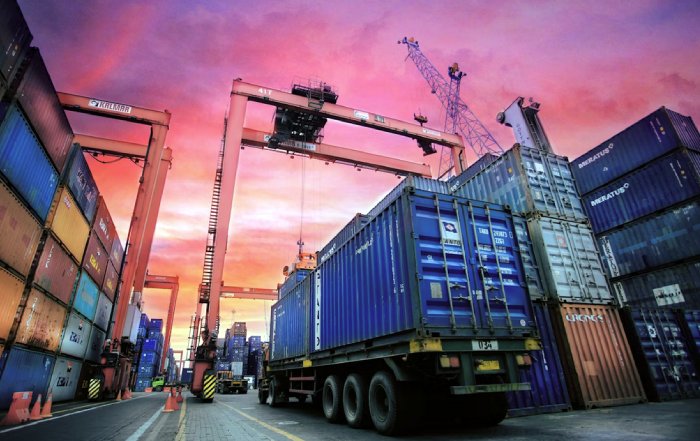
The last great structural leap in global trade was driven by containerization, standardized logistics, and just-in-time manufacturing, which together enabled the deep fragmentation of production across borders and powered decades of globalization. Today, a comparable transformation is underway as cloud computing, edge networks, 5G and emerging 6G connectivity, and advanced analytics become as indispensable to trade as ports and warehouses once were. The World Trade Organization has documented that digitally delivered services-from cloud software and digital media to professional and technical services-have grown significantly faster than trade in goods, steadily increasing their share of total trade and changing the export profile of both advanced and developing economies. Executives seeking to understand how these trends are reshaping sectoral competitiveness increasingly turn to WTO analysis on digital trade trends and services trade to complement their own market intelligence.
For the editorial team at BizFactsDaily.com, which has long tracked the intersection of business, technology, and global markets, this structural pivot is visible in almost every sector covered in the business hub. Manufacturers that once exported only physical products now bundle remote diagnostics, predictive maintenance, and subscription-based analytics into their offerings, turning one-off export sales into recurring, data-driven revenue streams. Digital-native firms, from software providers in Canada to creative studios in Australia and Spain, now reach global customers instantaneously via the cloud, while professional services firms in India, Poland, and Philippines deliver high-value knowledge work across borders in real time. The result is a trade landscape in which the line between goods and services is increasingly blurred, and in which digital infrastructure determines how quickly firms can reconfigure their business models in response to shocks, policy shifts, and competitive pressure.
Digital Infrastructure as a Trade Enabler
Digital infrastructure in 2026 extends far beyond fiber optic cables and hyperscale data centers. It encompasses multi-cloud architectures, edge computing nodes close to industrial sites, undersea cable systems linking continents, satellite constellations serving remote regions, digital identity and authentication systems, and AI-driven analytics that automate and orchestrate complex workflows across jurisdictions. This infrastructure has become a decisive trade enabler, lowering entry barriers for smaller firms, connecting suppliers and buyers in near real time, and making compliance with intricate trade, tax, and regulatory regimes more manageable and auditable.
The OECD has shown that investment in broadband, cloud adoption, and digital skills correlates strongly with higher export intensity, especially for small and medium-sized enterprises that previously lacked the scale, networks, or information needed to compete internationally. Executives who want a data-driven understanding of these correlations often review OECD work on digital transformation and trade performance, and then translate those findings into concrete investment priorities. For readers of BizFactsDaily.com, the practical implication is clear: firms that treat digital infrastructure as a strategic asset-by deploying cloud-based ERP and supply chain systems, integrating digital payment and invoicing platforms, and using analytics to anticipate demand and disruptions-are better positioned to expand across borders, manage volatility, and compete against both large incumbents and agile digital challengers.
AI and Automation: The Intelligence Layer of Global Trade
Artificial intelligence has become the intelligence layer that animates and optimizes global trade networks. By 2026, leading logistics providers, manufacturers, retailers, and financial institutions routinely deploy AI systems to forecast port congestion, optimize multimodal routing, automate customs and compliance documentation, detect fraud in trade finance, and dynamically adjust pricing and inventory across markets. Readers who follow BizFactsDaily.com's dedicated artificial intelligence coverage see how rapidly AI applications move from pilot projects to mission-critical infrastructure in cross-border operations.
Analytical work by organizations such as the McKinsey Global Institute suggests that AI and advanced analytics could add trillions of dollars in value to the global economy, with a substantial share of that value coming from efficiency gains and innovation in trade-related activities such as logistics, procurement, and after-sales services. Business leaders interested in sector-specific breakdowns frequently explore research on AI's economic potential and productivity impact to benchmark their own initiatives. In practice, AI-driven document processing is slashing the time needed for customs clearance in hubs from Rotterdam and Singapore to Los Angeles, while AI-enhanced trade finance platforms are improving credit risk assessment for exporters and importers in markets as diverse as Mexico, Kenya, and Vietnam, widening access to global markets for firms that previously struggled to secure working capital. This intelligence layer is increasingly embedded into end-to-end trade workflows, making AI literacy and governance a strategic competency for any organization engaged in international commerce.
Fintech, Banking, and the New Rails of Cross-Border Payments
Traditional cross-border payment systems, characterized by high fees, multi-day settlement times, and opaque correspondent banking chains, have long acted as a drag on global trade, particularly for SMEs and firms in emerging markets. By 2026, a new generation of digital financial infrastructure-real-time payment systems, open banking interfaces, API-based treasury solutions, and blockchain-enabled settlement networks-is modernizing the financial rails that underpin international commerce. Readers of BizFactsDaily.com follow this transformation through the platform's banking and investment sections, which examine how banks, fintechs, and big-tech platforms are reshaping trade finance, working capital management, and cross-border cash visibility.
The Bank for International Settlements has highlighted how multi-currency payment platforms, central bank digital currency experiments, and new messaging standards are reducing frictions in cross-border transactions and enabling near real-time settlement between trading partners. Executives and treasury leaders looking to understand the policy and technical foundations of these changes increasingly consult BIS work on innovations in cross-border payments and CBDCs. In parallel, major banks and fintech firms across Europe, Asia, and North America are collaborating on interoperable standards that connect domestic instant payment schemes, thereby reducing reliance on slower legacy networks and lowering costs for exporters and importers. For many companies in United States, United Kingdom, Japan, and Singapore, the strategic question in 2026 is no longer whether to adopt these new rails, but how quickly to re-platform treasury and trade finance operations to take full advantage of them while managing regulatory, cybersecurity, and liquidity risks.
Crypto, Tokenization, and the Future of Trade Finance
Beyond traditional fintech, cryptoassets, tokenization, and blockchain-based platforms are exerting a growing, though still uneven, influence on global trade workflows. By 2026, tokenized trade finance instruments, programmable smart contracts, and blockchain-based supply chain tracking have moved from isolated pilots to selective deployment among leading logistics firms, commodity traders, and global banks. For the BizFactsDaily.com audience tracking digital assets, the site's crypto section regularly explores how regulatory clarity, institutional adoption, and market infrastructure are shaping the role of crypto and tokenization in cross-border business.
Institutions such as the International Monetary Fund have stressed that while tokenization and distributed ledger technologies can make trade finance more transparent and efficient, they also introduce new forms of operational, legal, and market risk that require robust regulatory frameworks and international coordination. Policymakers and executives alike increasingly consult IMF analysis on crypto assets, tokenization, and global finance when evaluating new platforms or partnerships. In practice, tokenized letters of credit and blockchain-based bills of lading can reduce fraud, accelerate settlement, and improve visibility across multi-party supply chains linking producers in Thailand or Brazil with buyers in France, Italy, or Netherlands, but they must be aligned with existing legal frameworks, interoperable with legacy systems, and supported by strong digital identity and cybersecurity standards to avoid creating new systemic vulnerabilities.
Digital Platforms and the Globalization of SMEs
One of the most transformative effects of digital infrastructure on global trade has been its ability to integrate small and medium-sized enterprises into international markets at a scale that would have been unthinkable a decade ago. E-commerce marketplaces, B2B procurement platforms, cross-border logistics integrators, and digital export tools now enable a small manufacturer in Germany or a design studio in Malaysia to reach customers in Canada, Australia, Japan, or New Zealand with relatively modest upfront investment. Entrepreneurs and founders who rely on BizFactsDaily.com for strategic insight into growth pathways often turn to the platform's founders coverage to understand how digital channels are reshaping the trajectories of high-growth SMEs.
The International Trade Centre and the World Bank have documented how digital platforms reduce information asymmetries and transaction costs, offering SMEs access to market intelligence, logistics services, financing options, and digital marketing capabilities that were once the preserve of large multinationals. Business leaders interested in the development and competitiveness dimension of these changes regularly explore ITC work on SMEs, e-commerce, and inclusive trade. Yet platform-enabled globalization also brings strategic challenges: SMEs must navigate intensified competition from global rivals, dependency on dominant intermediaries, and complex rules around platform data, fees, and algorithms. For the BizFactsDaily.com readership, the key question is how to use platforms as springboards to global presence while building independent brand equity, customer relationships, and proprietary data assets that reduce vulnerability to platform policy shifts.
Data Flows, Regulation, and the Risk of Fragmentation
As data flows become the lifeblood of digital trade, regulatory regimes around data protection, localization, cyber resilience, and digital sovereignty are increasingly shaping market access and operating models. Jurisdictions such as the European Union, with the GDPR and evolving digital governance initiatives, China, with extensive data security and localization rules, and the United States, with a patchwork of sectoral and state-level regulations, are advancing divergent approaches that can either facilitate or fragment digital trade. For an audience spread across Europe, Asia, Africa, and North America, BizFactsDaily.com uses its global section to unpack how these legal frameworks affect data-intensive business models, cross-border cloud architectures, and AI deployment strategies.
The World Economic Forum has repeatedly warned of the risk of a fragmented "splinternet" of incompatible digital regimes, which would raise compliance costs, impede data-driven innovation, and erode many of the efficiency gains promised by digital infrastructure. Policymakers and corporate strategists increasingly rely on WEF analysis of data flows, digital trade policy, and interoperability when designing cross-border data strategies. In response, multinational companies are rethinking how they architect their data and application stacks, often moving toward regionally federated systems that respect local rules while still enabling global analytics and AI. Legal, compliance, and technology teams now work closely together to ensure that contracts, governance frameworks, and technical controls keep pace with rapidly evolving data and cybersecurity regulations, turning regulatory fluency into a core component of trade competitiveness.
Employment, Skills, and the Human Side of Digital Trade
The rapid expansion of digital infrastructure in global trade is reshaping labor markets and skill requirements in both advanced and emerging economies. On one side, digital trade and remote service delivery create new roles in software development, cybersecurity, digital marketing, customer success, and professional services that can be delivered from any location with robust connectivity. On the other, automation and AI in logistics, warehousing, manufacturing, and back-office processing are displacing or transforming traditional roles, requiring reskilling, upskilling, and more agile workforce planning. Executives and HR leaders who follow BizFactsDaily.com's employment coverage see how these forces are altering job profiles, wage structures, and talent strategies in regions from Sweden and Norway to South Africa, Malaysia, and Brazil.
The International Labour Organization has underscored that digitalization can support more productive and flexible work, but also risks deepening inequalities if access to digital tools, education, and social protection is uneven. Decision-makers looking for a global perspective on these shifts increasingly consult ILO research on the future of work in a digital economy. For companies engaged in cross-border trade, investing in digital skills development, fostering inclusive remote and hybrid work cultures, and building cross-border collaboration capabilities have become essential to sustaining competitiveness. The organizations that readers encounter most frequently in BizFactsDaily.com case studies are those that treat workforce development as a strategic pillar of their digital trade agenda, not as an afterthought to technology investment.
Innovation, Supply Chains, and Resilience in a Volatile World
Geopolitical tensions, climate-related disruptions, and the lingering effects of recent health crises have exposed the fragility of traditional global supply chains and accelerated the search for more resilient, flexible, and transparent production networks. Digital infrastructure now sits at the center of this resilience agenda, providing real-time visibility into inventories and shipments, enabling digital twins and scenario simulations, and supporting rapid reconfiguration of supplier portfolios in response to shocks. Readers of BizFactsDaily.com regularly turn to the innovation section for case studies on how leading firms in United States, Germany, China, Japan, and Singapore are using data, AI, and automation to redesign their supply chains.
Organizations such as UNCTAD and the World Bank have emphasized that digital technologies can help developing countries integrate more effectively into regional and global value chains, provided there is sustained investment in connectivity, logistics, and regulatory capacity. Business leaders examining the development dimension of supply chain transformation often review UNCTAD's work on e-commerce, trade logistics, and development. For multinationals with complex supplier networks across Asia, Europe, Africa, and North America, tools such as IoT-enabled asset tracking, predictive risk analytics, and AI-assisted sourcing are no longer experimental; they are embedded into core operating models and board-level risk oversight. In this environment, the ability to combine digital infrastructure with sophisticated risk management and scenario planning is becoming a defining characteristic of global trade leaders.
Sustainability, ESG, and Digital Transparency in Trade
Sustainability and ESG considerations are now deeply embedded in trade policy, procurement criteria, consumer expectations, and investor mandates, and digital infrastructure is playing a pivotal role in enabling transparency and accountability across global value chains. Traceability platforms, blockchain-based provenance systems, and real-time emissions monitoring tools allow companies to document and communicate the environmental and social footprint of products from raw materials to end-of-life. For readers of BizFactsDaily.com who focus on sustainable business models and green finance, the site's sustainable business section examines how digital tools are transforming ESG reporting, sustainable sourcing, and regulatory compliance across industries.
The United Nations and OECD have highlighted that digital technologies can accelerate progress toward the Sustainable Development Goals by improving resource efficiency, supporting circular economy models, and increasing transparency in supply chains that stretch across Africa, Asia, Europe, and the Americas. Executives seeking policy context and empirical evidence frequently consult UN work on digitalization, sustainability, and the SDGs. At the same time, the environmental footprint of digital infrastructure itself-particularly energy-intensive data centers and network equipment-has come under closer scrutiny from regulators, investors, and customers. Leading technology and infrastructure providers in United States, Netherlands, Denmark, and Switzerland are responding by investing in renewable energy, energy-efficient hardware, and innovative cooling solutions, aiming to ensure that the digital backbone of global trade supports, rather than undermines, climate and ESG commitments.
Stock Markets, Capital Flows, and Digital Trade Champions
Capital markets have become a powerful barometer of investor expectations about the long-term impact of digital infrastructure on global trade. By 2026, the market capitalization of leading cloud providers, cybersecurity firms, logistics technology platforms, and digital payment companies in United States, China, Europe, and Asia-Pacific reflects the conviction that digital trade will remain a structural growth driver for decades. Readers of BizFactsDaily.com who track these developments closely use the stock markets section to understand how digital trade themes are influencing sector rotations, valuation premiums, and capital allocation decisions.
Major exchanges such as Nasdaq, NYSE, London Stock Exchange, and Deutsche Börse continue to list companies whose core value proposition lies in enabling cross-border digital connectivity, data security, or trade automation, while sovereign wealth funds and institutional investors from regions including the Middle East, North America, and Asia are allocating substantial capital to infrastructure funds and technology firms that underpin digital trade. Analysts and policymakers increasingly turn to OECD reports on digitalization and finance, including capital markets trends to interpret how these flows may affect financial stability and innovation. Against this backdrop, regulators are tightening expectations around cybersecurity, operational resilience, and data governance for listed companies, recognizing that digital infrastructure has become systemically important not only to trade, but also to the functioning of global financial markets.
Strategic Imperatives for Business Leaders in 2026
For the executive audience of BizFactsDaily.com, the rise of digital infrastructure as a core driver of global trade translates into a series of strategic imperatives that cut across technology, operations, finance, compliance, and corporate governance. Organizations must reconceive their technology stacks not as back-office utilities, but as strategic platforms that determine their ability to enter and serve new markets, collaborate securely with partners, and comply with divergent regulatory regimes. This shift requires close alignment between CIOs, CTOs, CFOs, chief risk officers, and business unit leaders, as well as a nuanced understanding of how digital infrastructure investments intersect with trade strategy, tax planning, and legal structure. Many readers deepen their perspective by combining BizFactsDaily.com's technology insights and global business news with specialized external resources on digital trade governance and cross-border regulation.
At the same time, firms must navigate a policy environment in which data governance, digital trade provisions in regional and bilateral agreements, cybersecurity standards, and competition policy are all evolving. The World Trade Organization, OECD, and regional trade blocs are actively negotiating and refining digital trade rules that will shape market access and compliance obligations for years to come. Companies that engage proactively with these processes-through industry associations, public-private partnerships, and direct dialogue with regulators-are better positioned to anticipate change, influence outcomes, and adapt their operating models ahead of competitors. For the BizFactsDaily.com community, the organizations that stand out are those that pair technological sophistication with strong governance, transparent risk management, and a clear narrative about how their digital trade strategies create value for customers, employees, investors, and the societies in which they operate.
Looking Ahead: A More Connected, Yet More Complex, Trading System
By 2026, the contours of a new, digitally enabled global trading system are clearly visible, even as its governance frameworks and distributional outcomes remain contested and fluid. Digital infrastructure has lowered barriers to entry, enabled new forms of value creation, and increased the speed, transparency, and resilience of cross-border transactions, benefiting businesses and consumers in North America, Europe, Asia, Africa, and South America. At the same time, this transformation has introduced new risks related to cybersecurity, data privacy, market concentration, regulatory fragmentation, and digital inequality, all of which demand careful management and international cooperation.
For BizFactsDaily.com and its readership of executives, investors, founders, and policymakers, the central challenge in this new era is to harness the benefits of digital infrastructure for global trade while mitigating its risks and ensuring that the gains are broadly shared. Meeting that challenge requires sustained investment in connectivity, skills, and innovation; thoughtful engagement with evolving regulatory and trade frameworks; and a commitment to building resilient, sustainable, and inclusive business models that can thrive in a world where data and algorithms are as critical to trade as containers and cargo ships once were. As digital infrastructure continues to expand and mature, the organizations that combine deep operational expertise with strategic foresight, ethical governance, and a clear understanding of their role in an increasingly interconnected trading system will be the ones most likely to define the next chapter of global commerce-a chapter that BizFactsDaily.com will continue to document, analyze, and interpret for its global audience.
