
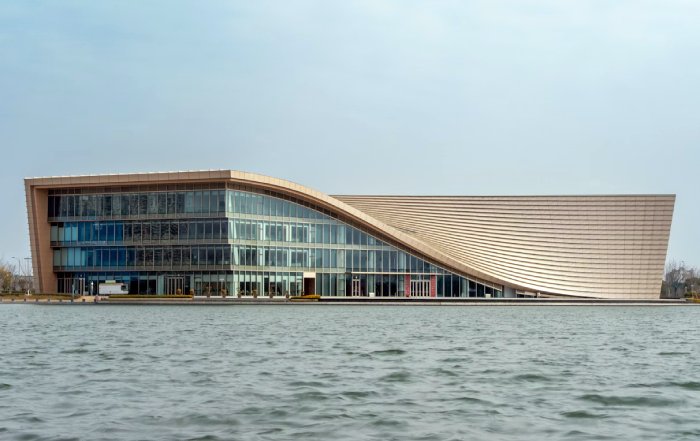
The Future of Corporate Headquarters in a Remote World
The corporate headquarters is no longer simply a landmark address or a gleaming tower on a financial district skyline; instead, it has become a strategic question that cuts across real estate, technology, talent, regulation, and brand. For readers of BizFactsDaily, whose interests span artificial intelligence, banking, global markets, and sustainable growth, the shifting role of the headquarters is not an abstract urban planning issue but a practical matter of competitive advantage, risk management, and long-term value creation in a world where remote and hybrid work are now default expectations rather than experimental perks.
From Symbolic Flagship to Distributed Nerve Center
For much of the twentieth century, the corporate headquarters functioned as a physical symbol of power, stability, and prestige. The address on a letterhead in New York, London, Frankfurt, or Tokyo signaled credibility to investors, regulators, and customers, while the building itself concentrated senior leadership, core staff, and decision-making authority. This model was reinforced by analog communication, limited telepresence, and the centralization of data and records. Even as digital tools improved, the gravitational pull of a single headquarters remained strong, especially in sectors like banking, energy, and manufacturing.
The COVID-19 pandemic and the rapid normalization of remote work shattered many of these assumptions and forced executives to confront the possibility that large, centralized offices might be more historical artifact than operational necessity. Studies by organizations such as McKinsey & Company have documented the persistence of hybrid work patterns and the productivity potential of distributed teams, while research from institutions like the Harvard Business School has examined how remote collaboration can reshape innovation and management practices. As global firms across the United States, Europe, and Asia restructured their office footprints, it became clear that the headquarters of the future would be less about physical size and more about strategic function, digital infrastructure, and cultural coherence.
For BizFactsDaily readers tracking broad shifts in the business landscape, this transition intersects with macroeconomic trends explored on its dedicated business insights page and the evolving role of technology in corporate strategy, highlighting how the headquarters is becoming a more fluid, networked concept rather than a fixed geographic point.
Hybrid Work as the New Operating System
The rise of remote and hybrid work has effectively installed a new operating system for corporations across North America, Europe, and Asia-Pacific. Organizations from Microsoft and Salesforce in the United States to Siemens in Germany and Infosys in India have adopted flexible work models that blend in-office collaboration with remote autonomy. Data from bodies such as the OECD show that knowledge-intensive sectors-finance, professional services, technology, and creative industries-have been particularly quick to embed hybrid arrangements, while regulatory guidance and labor market dynamics in countries such as the United Kingdom, Canada, and Australia have further normalized flexible work.
In this environment, the corporate headquarters is evolving into a hub for periodic convergence rather than daily attendance. Instead of measuring success by occupancy rates, executives now evaluate how effectively headquarters support innovation sprints, leadership alignment, client engagement, and cultural rituals that cannot be fully replicated on video calls. Organizations are redesigning spaces to prioritize collaboration zones, project rooms, and event spaces, while reducing traditional assigned desks and private offices. Research from the World Economic Forum on the future of work underscores how hybrid models, when thoughtfully designed, can improve inclusion and expand access to global talent pools, a theme that aligns closely with the employment-focused coverage on BizFactsDaily's employment section.
At the same time, this shift demands new management disciplines. Executives must master asynchronous communication, outcome-based performance measurement, and digital-first leadership while ensuring that remote employees in countries such as Brazil, South Africa, or Singapore feel as connected and empowered as colleagues in New York or London. The headquarters, in this sense, becomes a symbolic anchor for a distributed organization, embodying values and standards while no longer monopolizing presence or influence.
Real Estate, Cost Optimization, and Capital Allocation
From a financial perspective, the reimagining of headquarters has profound implications for corporate balance sheets and investor expectations. Office leases and owned properties in prime locations historically represented substantial fixed costs. As hybrid work reduces daily occupancy, many boards are reevaluating whether these assets deliver adequate returns relative to flexible alternatives. Analysts tracking global property markets through platforms like CBRE and JLL have observed significant subleasing activity and consolidation of space in central business districts across the United States, the United Kingdom, Germany, and parts of Asia.
For CFOs and investors, the question is not simply how to shrink footprints but how to redeploy capital in ways that support long-term competitiveness. Savings from reduced office space can be redirected into digital infrastructure, cybersecurity, AI-driven productivity tools, or strategic acquisitions. In sectors covered extensively on BizFactsDaily's investment hub, such as fintech, enterprise software, and green technologies, this reallocation can directly influence innovation capacity and market positioning. Learn more about how evolving stock markets dynamics reflect these shifts in corporate strategy and asset-light operating models.
However, the calculus is not purely financial. Real estate decisions intersect with brand perception, regulatory presence, and stakeholder expectations. A global bank headquartered in Zurich or London, for example, must weigh the signaling value of a flagship building near key regulators and institutional clients against the flexibility and resilience of a more distributed office network. In fast-growing hubs such as Singapore, Dubai, and Toronto, governments and development agencies are actively courting multinational headquarters relocations, offering tax incentives and infrastructure support, as detailed in policy reviews by organizations like the World Bank. For multinational corporations, the future headquarters portfolio may involve a combination of a lean global headquarters, several regional hubs, and a network of smaller collaboration centers, each optimized for specific functions and markets.
What's Your Ideal Headquarters Model?
Answer 5 questions to discover the right HQ strategy for your organization
Technology, AI, and the Virtual Headquarters
The most transformative force reshaping the headquarters is digital technology, particularly advances in cloud computing, collaboration platforms, and artificial intelligence. The corporate nerve center is increasingly less about where people sit and more about how data flows, decisions are made, and knowledge is shared. Cloud-based ecosystems from providers such as Amazon Web Services, Microsoft Azure, and Google Cloud enable secure access to applications and data from virtually anywhere, while platforms like Slack, Zoom, and Microsoft Teams have become the connective tissue of daily operations.
Artificial intelligence, a core area of interest for BizFactsDaily readers and explored in depth on its artificial intelligence analysis page, is amplifying this transformation. AI-driven analytics help executives monitor real-time performance across geographies, identify emerging risks in supply chains, and personalize internal communications for diverse employee segments. Generative AI tools assist in drafting reports, summarizing meetings, and synthesizing complex data, allowing headquarters staff to focus on higher-order strategic thinking. Learn more about how leading organizations adopt AI at scale through resources from MIT Sloan Management Review and the Stanford Human-Centered AI Institute, which explore practical frameworks for responsible adoption.
Beyond productivity, technology is enabling the rise of the "virtual headquarters"-a persistent digital environment where employees can access resources, interact with colleagues, and engage with leadership regardless of physical location. Some organizations experiment with immersive platforms and extended reality environments, particularly in technologically advanced markets like South Korea, Japan, and the Netherlands, drawing on research and standards work from groups such as the IEEE. While the long-term role of virtual reality in mainstream corporate life remains uncertain, the broader principle is clear: the headquarters is becoming as much a software layer as a physical place, and competitive advantage will accrue to organizations that design these digital layers with clarity, security, and inclusivity.
Regulatory, Tax, and Governance Considerations
Even as technology dissolves geographic constraints, the legal and regulatory realities of corporate life ensure that headquarters still matter. The formal "seat" of a corporation determines which legal system governs its operations, how it is taxed, and which regulatory bodies oversee its activities. Multinational enterprises operating across Europe, North America, and Asia must navigate a complex mosaic of rules related to data protection, employment law, financial reporting, and sector-specific oversight.
The rise of remote work complicates this landscape. When employees are dispersed across countries such as France, Italy, Spain, or Thailand, questions arise about permanent establishment, payroll taxes, and compliance with local labor regulations. Guidance from tax authorities and reports from organizations like the OECD and the International Monetary Fund highlight the need for clear policies on cross-border remote work, as well as robust internal governance frameworks. For decision-makers following global policy shifts, BizFactsDaily's global coverage and economy analysis provide context on how governments are adapting regulatory frameworks to the digital and distributed nature of modern enterprises.
Corporate governance is also evolving. Boards must oversee not just physical offices but a distributed risk surface that includes cybersecurity threats, data privacy concerns, and cultural fragmentation across remote teams. Regulators such as the U.S. Securities and Exchange Commission and the European Securities and Markets Authority increasingly expect transparent disclosure of operational risks, including those related to technology and workforce structure. For headquarters functions such as internal audit, compliance, and risk management, this means building capabilities that can operate seamlessly across virtual channels and time zones, while ensuring that whistleblowing mechanisms, internal controls, and ethical standards remain robust.
Talent, Culture, and Leadership in a Distributed Era
If technology provides the infrastructure for the future headquarters, talent and culture define its purpose. The ability to attract, develop, and retain high-performing employees across geographies is now a central strategic concern for organizations in the United States, the United Kingdom, Germany, Singapore, and beyond. Surveys from institutions such as Gallup and the Chartered Institute of Personnel and Development indicate that employees increasingly value flexibility, autonomy, and meaningful work, even as they seek opportunities for in-person connection, mentorship, and career progression.
For leadership teams, this creates a nuanced challenge. Headquarters can no longer rely on physical proximity to cultivate culture or signal status; instead, they must design intentional rituals and communication practices that bridge remote and in-person experiences. Town halls, leadership Q&A sessions, and cross-functional innovation days hosted at headquarters or regional hubs take on heightened significance, especially when combined with transparent digital communication and inclusive decision-making. Readers interested in how founders and CEOs adapt their leadership styles in this environment can explore stories and analysis on BizFactsDaily's founders section, which frequently highlights how entrepreneurial leaders in North America, Europe, and Asia are rethinking organizational design.
The distributed model also opens new possibilities for diversity and inclusion. By hiring beyond traditional headquarters cities, companies can tap into talent in regions such as South Africa, Brazil, Malaysia, and Eastern Europe, bringing in perspectives that enrich innovation and resilience. However, this potential can only be realized if headquarters functions-HR, learning and development, and corporate communications-are equipped to support equitable access to opportunities, fair performance evaluations, and culturally sensitive leadership. Resources from organizations like SHRM and the World Economic Forum provide frameworks for building inclusive hybrid workplaces that align with these goals.
Sustainability, ESG, and the Green Headquarters
Sustainability and environmental, social, and governance (ESG) considerations have become central to corporate strategy in 2026, particularly in regions such as the European Union, the United Kingdom, and parts of Asia-Pacific where regulatory and investor expectations are increasingly stringent. The headquarters, as a visible manifestation of corporate values, plays a symbolic and practical role in this agenda. Energy-efficient building designs, green certifications, and low-carbon operations are no longer optional branding elements but integral components of ESG reporting and stakeholder engagement.
Organizations across sectors-from banking and insurance to technology and manufacturing-are evaluating how their real estate decisions align with climate commitments and net-zero targets. Reports by the International Energy Agency and the UN Environment Programme highlight the significant share of global emissions attributable to buildings and construction, underscoring the importance of retrofitting existing headquarters and designing new ones to high sustainability standards. Learn more about sustainable business practices and their financial implications by exploring BizFactsDaily's sustainability-focused coverage, which regularly examines how ESG performance influences investment flows and brand equity.
Remote and hybrid work models can contribute to sustainability goals by reducing commuting-related emissions and enabling more efficient use of office space, but they also introduce new complexities. Home energy use, digital infrastructure, and the environmental footprint of data centers become part of the equation. Forward-looking headquarters strategies therefore integrate physical and digital sustainability, leveraging renewable energy, smart building technologies, and responsible IT practices. Investors, particularly in Europe and North America, increasingly scrutinize these dimensions when assessing long-term value and risk, a trend reflected in coverage on BizFactsDaily's banking and economy pages.
Sector-Specific Headquarters Strategies
While the overarching trends are global, the future of corporate headquarters varies significantly by sector, reflecting differing regulatory constraints, customer expectations, and operational models. In banking and financial services, for example, regulatory proximity and client trust still argue for prominent headquarters in major financial centers such as New York, London, Frankfurt, Zurich, Singapore, and Hong Kong. Yet even here, back-office functions, technology teams, and some client services are increasingly distributed, supported by secure digital platforms and regional service hubs. Readers can delve deeper into these sectoral nuances through BizFactsDaily's banking analysis and global finance coverage, which trace how traditional financial institutions and fintech challengers balance physical presence with digital scale.
In technology and innovation-driven sectors, the headquarters often functions as a flagship innovation campus, combining R&D labs, demonstration spaces, and brand experiences. Companies in the United States, South Korea, and Sweden have invested in campuses that serve as magnets for talent and partners, while simultaneously enabling remote collaboration with satellite teams worldwide. The interplay between physical innovation hubs and distributed engineering teams is a recurring theme on BizFactsDaily's innovation page and technology coverage, where case studies illustrate how leading firms orchestrate global R&D networks.
Crypto and blockchain companies, many of which have roots in decentralized communities, present another variation. Some high-profile firms in this space have historically embraced "remote-first" or "no headquarters" narratives, yet regulatory pressures in the United States, Europe, and Asia are pushing them toward more formalized legal domiciles and compliance structures. This tension between decentralization and regulatory anchoring is a key storyline on BizFactsDaily's crypto page, where readers can follow how digital asset platforms reconcile their global user bases with jurisdiction-specific requirements.
Implications for Global Competition and City Economies
The evolution of corporate headquarters has significant implications not only for companies but also for cities, regions, and national economies. Historically, landing a major corporate headquarters was a prize for metropolitan areas, promising high-paying jobs, tax revenues, and ecosystem effects. As remote work and distributed models gain ground, the link between headquarters location and local economic impact becomes more complex. Cities such as New York, London, and Tokyo remain influential, but they now compete not only with each other but also with rising hubs like Austin, Berlin, Toronto, Singapore, and Dubai, which market themselves as flexible, livable, and innovation-friendly bases for global firms.
Urban economists and policy analysts, including those at institutions like the Brookings Institution and the London School of Economics, are examining how these shifts affect real estate markets, public transportation, and municipal finances. Reduced daily office occupancy can strain local service businesses while freeing space for residential or mixed-use developments. Governments in countries ranging from Canada and Australia to the Netherlands and Denmark are experimenting with policies that encourage adaptive reuse of office buildings, digital infrastructure investment, and regional development to balance capital city dominance.
For multinational corporations, these dynamics present both opportunities and responsibilities. A more flexible headquarters strategy allows firms to access diverse talent pools and tap into specialized ecosystems-for example, fintech in London, AI in Toronto, or advanced manufacturing in Germany and South Korea-while also requiring thoughtful engagement with local communities and policy frameworks. Readers tracking these global shifts can find ongoing analysis on BizFactsDaily's global and news pages, which connect corporate decisions to broader economic and social trends across continents.
Strategic Choices for the Next Decade
As executives, investors, and policymakers look beyond 2026, the future of corporate headquarters will be shaped by a series of interlocking strategic choices. Organizations must determine the optimal balance between physical and virtual presence, centralization and distribution, cost efficiency and experiential value. They must invest in digital infrastructure and AI capabilities that make remote collaboration seamless while preserving the headquarters as a powerful focal point for culture, innovation, and stakeholder engagement. They must navigate evolving regulatory landscapes, tax regimes, and ESG expectations across jurisdictions from the United States and the European Union to Asia, Africa, and South America.
For the BizFactsDaily audience, which spans sectors from banking and crypto to marketing and sustainable investment, these decisions are not purely theoretical. They influence how capital is allocated, how teams are structured, how brands are experienced, and how markets evolve. The way organizations answer the headquarters question will reverberate through marketing strategies, employment models, and investment theses, shaping the contours of global competition in the years ahead.
In this emerging reality, the most successful enterprises will be those that treat the headquarters not as a static monument but as a dynamic platform-physical, digital, and cultural-for orchestrating a truly global, resilient, and innovative organization. By staying informed through resources like BizFactsDaily's main business portal, leaders can continuously recalibrate their approach, aligning the evolving role of the headquarters with the demands of a remote-enabled world and the opportunities of a rapidly transforming global economy.
