
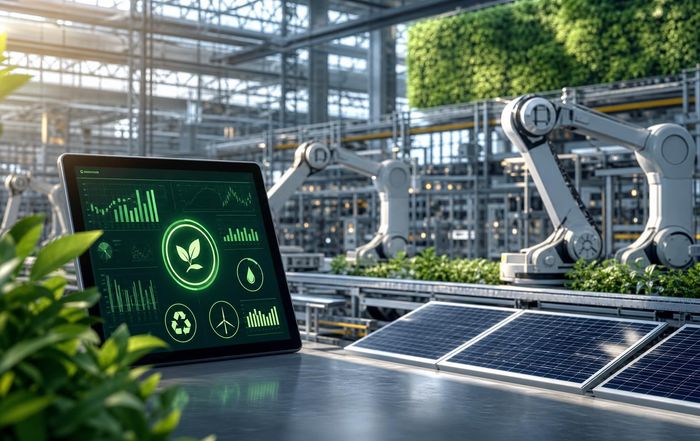
Sustainable Technology Adoption in Manufacturing: How 2026 Became a Turning Point
Why Sustainable Manufacturing Now Sits at the Center of Global Strategy
Sustainable technology adoption in manufacturing has shifted from a peripheral corporate social responsibility initiative to a core strategic imperative for industrial leaders across North America, Europe, Asia and beyond. For the audience of BizFactsDaily.com, whose interests span artificial intelligence, banking, business, crypto, the broader economy, employment, founders, global markets, innovation, investment, marketing, stock markets, sustainability and technology, the transformation unfolding on factory floors is no longer an abstract environmental debate but a direct driver of profitability, competitiveness and long-term enterprise value.
Manufacturers in the United States, United Kingdom, Germany, China, Japan, South Korea and other advanced industrial economies are increasingly judged by investors, regulators, customers and employees on their ability to decarbonize operations, reduce waste and modernize production systems. The shift is visible in capital allocation patterns, in the evolution of global supply chains and in the way listed industrials are valued in the stock markets. Readers following the broader economic context at BizFactsDaily Economy can already see how industrial sustainability metrics are being integrated into macroeconomic outlooks, credit ratings and even sovereign industrial strategies.
The convergence of regulatory pressure, technological maturity and stakeholder expectations has turned sustainable technology adoption from a cost center into a risk management and growth opportunity. Those visiting BizFactsDaily Business will recognize that manufacturing is now a test case for how quickly large, asset-heavy sectors can reinvent themselves without sacrificing productivity or shareholder returns.
The Regulatory and Market Forces Reshaping Manufacturing Decisions
Manufacturing decision-makers in 2026 operate in a policy environment that is more demanding, more transparent and more data-driven than at any previous point. In the European Union, the European Commission's European Green Deal and the associated Fit for 55 package have created a clear decarbonization trajectory for industry, with carbon pricing mechanisms and disclosure rules that strongly encourage investments in low-carbon technologies. Meanwhile, in the United States, the U.S. Department of Energy has been promoting industrial efficiency and clean manufacturing through programs such as the Advanced Manufacturing Office initiatives, which offer technical assistance and funding to accelerate the deployment of efficient and low-emission technologies.
These policy frameworks are complemented by disclosure and reporting expectations that have rapidly become global. The International Sustainability Standards Board (ISSB) has introduced baseline sustainability disclosure standards that major markets are beginning to align with, while the Task Force on Climate-related Financial Disclosures (TCFD) has set expectations around climate risk reporting that influence industrial strategy across Canada, Australia, Japan, Singapore and South Africa. Manufacturers seeking to understand how such disclosures affect investor sentiment can relate this trend to coverage at BizFactsDaily Investment, where capital markets analysis increasingly highlights the link between sustainability performance and cost of capital.
Market forces amplify these regulatory signals. Global brands in sectors such as automotive, consumer electronics and fast-moving consumer goods are imposing stringent environmental requirements on their suppliers, often extending to Tier 2 and Tier 3 manufacturing partners in Thailand, Malaysia, Brazil and Mexico. Large retailers and technology companies, including Walmart, Apple, Microsoft and Siemens, have introduced supplier codes of conduct and emissions reduction targets that effectively oblige smaller manufacturers to adopt cleaner technologies or risk exclusion from lucrative global value chains. For more context on how global corporate strategies cascade through supply chains, readers can explore BizFactsDaily Global, where cross-border trade and industrial policy are examined in depth.
The Role of Artificial Intelligence in Sustainable Manufacturing
The emergence of industrial-grade artificial intelligence has been one of the most consequential developments for sustainable technology adoption in manufacturing. By 2026, AI-driven optimization, predictive maintenance and quality control systems are no longer experimental pilots but production-level tools that materially reduce energy consumption, scrap rates and unplanned downtime. Manufacturers that follow AI developments at BizFactsDaily Artificial Intelligence will recognize how quickly industrial AI has moved from theory to practice.
Advanced machine learning models, deployed on edge devices and integrated with industrial control systems, can now fine-tune process parameters in real time to minimize energy use while maintaining or improving output quality. For example, in continuous process industries such as steel, cement and chemicals, AI-based process control has been shown to reduce fuel consumption and emissions significantly. Organizations like McKinsey & Company have highlighted in their industry decarbonization insights that digital and analytics tools can cut energy costs by double-digit percentages in some manufacturing settings.
Predictive maintenance, enabled by AI models trained on sensor data from motors, pumps, conveyors and other critical equipment, helps manufacturers avoid catastrophic failures that often result in energy-intensive restarts, product losses and emergency logistics. By forecasting when equipment is likely to fail and scheduling maintenance during planned downtime, manufacturers can extend asset life, reduce spare parts consumption and maintain more stable, efficient operations. For a deeper view into the intersection of AI, technology and industrial performance, readers can refer to BizFactsDaily Technology, where emerging tools and platforms are evaluated through a business lens.
Computer vision systems, powered by deep learning, also contribute to sustainability by improving first-pass yield and reducing rework. High-resolution cameras and AI models inspect products at speed, identifying defects early and allowing process adjustments before large quantities of material are wasted. Over time, this capability reduces scrap, cuts raw material demand and lowers the embedded carbon of each unit produced.
Interactive Feature: Sustainable Manufacturing Readiness Slider
Sustainable Manufacturing Readiness Simulator
2026 Factory SnapshotMove the sliders to reflect your factory's current capabilities. The dashboard will estimate your overall sustainability readiness and highlight where to invest next.
Tip: aim for both a higher overall score and a balanced portfolio. Over-investing in one area while neglecting others can slow down real-world impact.
Electrification, Renewables and the Path to Low-Carbon Factories
Beyond digital optimization, the most visible dimension of sustainable technology adoption in manufacturing is the shift away from fossil fuels toward electrification and renewable energy. Factories in Germany, Sweden, Norway, Denmark and the Netherlands are at the forefront of electrifying heat processes, leveraging increasingly decarbonized power grids to reduce direct emissions from boilers, furnaces and dryers. Heat pumps, induction heating and other electric technologies are gradually replacing natural gas and oil in suitable applications, particularly in low- and medium-temperature processes.
The International Energy Agency (IEA) has documented this transition in its Energy Technology Perspectives, which outline pathways for industry to reach net-zero emissions. For manufacturers, the economic case for electrification improves as renewable electricity prices decline and carbon pricing mechanisms increase the cost of fossil fuel use. Long-term power purchase agreements with wind and solar developers provide predictable energy costs and support corporate climate commitments.
On-site renewable generation, including rooftop solar and small-scale wind, is becoming more common in industrial parks across China, India, Spain, Italy and Brazil, often combined with battery storage to manage peak loads and grid instability. In regions where grids are less reliable, such as parts of Africa and South America, hybrid renewable-diesel microgrids are being deployed as transitional solutions, with a clear roadmap to phase out fossil components as storage and grid infrastructure improve.
Hydrogen is emerging as a strategic option for hard-to-abate sectors such as steel and chemicals. Pilot projects in Germany, Japan and South Korea are exploring green hydrogen as a replacement for coking coal and natural gas in high-temperature processes. Reports from organizations like the World Economic Forum on decarbonizing heavy industry highlight the potential of hydrogen, although costs, infrastructure and regulatory frameworks remain significant constraints.
Circular Manufacturing and Materials Innovation
Sustainable technology adoption in manufacturing extends beyond energy systems to encompass circularity, materials efficiency and waste reduction. Manufacturers are increasingly redesigning products and processes to enable reuse, remanufacturing and high-quality recycling, thus reducing the demand for virgin raw materials and the environmental impacts associated with extraction and transport.
In sectors such as automotive and electronics, producers in the European Union, United Kingdom and Canada are responding to extended producer responsibility regulations by investing in technologies that facilitate disassembly, component tracking and materials recovery. Robotics, advanced sorting systems and digital product passports are enabling higher recovery rates for metals, plastics and rare earth elements. The Ellen MacArthur Foundation has become a reference point for companies exploring circular economy strategies, providing frameworks and case studies that inform boardroom decisions.
Materials innovation is also reshaping manufacturing footprints. Bio-based plastics, low-carbon cements and recycled content steels are gradually moving from niche options to mainstream inputs in construction, packaging and consumer goods. BASF, Dow, Holcim and other global materials companies are deploying new chemistries and processes that reduce lifecycle emissions while maintaining performance standards. For founders and innovators tracking these developments, BizFactsDaily Innovation offers a vantage point on how new materials and process technologies progress from lab to large-scale deployment.
Digital platforms that track material flows, carbon footprints and compliance data across supply chains are becoming essential tools for manufacturers operating in multiple jurisdictions. These platforms, often built on cloud infrastructure and integrated with enterprise resource planning systems, provide the transparency and traceability that regulators, investors and customers increasingly demand.
Financing the Transition: Banks, Capital Markets and New Instruments
The scale of investment required to modernize manufacturing facilities, upgrade equipment and deploy new technologies is immense, and the financial sector has become a central actor in enabling or constraining sustainable technology adoption. Banks, institutional investors and multilateral development institutions are all reshaping their offerings to support industrial decarbonization, while also managing the associated risks.
Major global banks such as HSBC, BNP Paribas, JPMorgan Chase and Deutsche Bank have expanded their sustainable finance portfolios, offering green loans, sustainability-linked loans and project finance structures tailored to industrial retrofits and renewable energy projects. The World Bank and regional development banks provide concessional financing and guarantees for industrial efficiency programs in emerging markets, recognizing the importance of manufacturing for employment and economic development. For readers monitoring these trends, BizFactsDaily Banking provides context on how credit conditions and regulatory expectations influence industrial investment decisions.
Capital markets have also embraced sustainable manufacturing themes. Green bonds and sustainability-linked bonds issued by manufacturers in Europe, Asia and North America are increasingly oversubscribed, reflecting strong investor appetite for credible transition stories. The Climate Bonds Initiative tracks the growth of green bond markets and provides taxonomies that help issuers and investors align on what qualifies as a green industrial investment.
Private equity and infrastructure funds are targeting brown-to-green industrial transformation strategies, acquiring carbon-intensive assets with the explicit intention of upgrading them through technology and operational improvements. These strategies rely heavily on robust measurement, reporting and verification frameworks to demonstrate emissions reductions and financial performance.
Digital assets and blockchain-based solutions are beginning to play a niche but growing role in tracking industrial emissions and energy use. While crypto assets remain volatile and speculative, some manufacturers and energy providers are exploring tokenized carbon credits and blockchain-enabled traceability solutions. Readers interested in the intersection of digital finance and industrial sustainability can explore BizFactsDaily Crypto, where such innovations are examined from a risk and opportunity perspective.
Employment, Skills and Organizational Change on the Factory Floor
Sustainable technology adoption is not purely a technical or financial challenge; it is also an organizational and human capital transformation. As manufacturers introduce AI systems, advanced automation, renewable energy infrastructure and circular processes, the skills required on the factory floor and in management change substantially. This has direct implications for employment trends, labor relations and regional development, themes that are regularly covered at BizFactsDaily Employment.
Workers in Germany, Sweden, France, Italy and Spain are experiencing a shift from manual, repetitive tasks toward roles that require data literacy, digital tool proficiency and cross-functional problem-solving. Maintenance technicians are becoming reliability engineers who work closely with data scientists; process operators are learning to interpret dashboards and AI recommendations; procurement teams are integrating sustainability criteria into supplier evaluations. The International Labour Organization (ILO) has examined these dynamics in its work on green jobs and just transition, emphasizing the need for reskilling and social dialogue to ensure that the benefits of industrial transformation are broadly shared.
In emerging markets such as India, Vietnam, Indonesia and South Africa, sustainable manufacturing technologies present both opportunities and risks for employment. On one hand, new investments in clean industrial parks, renewable energy-powered factories and circular economy infrastructure can create high-quality jobs and attract foreign direct investment. On the other hand, automation and digitalization may reduce labor intensity in some sectors, requiring proactive policies to support workforce transitions.
Leadership and governance structures within manufacturing firms are also evolving. Boards are adding directors with expertise in sustainability, digital transformation and industrial technology, recognizing that traditional experience in operations or finance is no longer sufficient. Executive compensation schemes increasingly incorporate emissions reduction targets and resource efficiency metrics, aligning management incentives with long-term sustainability goals.
Founders, Mid-Market Champions and the Innovation Ecosystem
While large multinationals dominate headlines, a significant share of innovation in sustainable manufacturing technologies originates from mid-sized enterprises and start-ups. Founders in the United States, United Kingdom, Germany, Canada, Israel and Singapore are building companies that specialize in AI-driven process optimization, advanced robotics, novel materials, industrial IoT platforms and circular economy solutions. Many of these firms partner closely with established manufacturers to pilot and scale technologies in real production environments.
For readers of BizFactsDaily Founders, the sustainable manufacturing space offers a rich landscape of entrepreneurial stories. Some founders come from engineering or operations backgrounds and have firsthand experience of inefficiencies on the shop floor; others emerge from academic research in materials science, computer science or energy systems. Venture capital funds focused on climate tech and industrial innovation, such as Breakthrough Energy Ventures and Congruent Ventures, have been instrumental in providing patient capital and sector-specific expertise.
Mid-market manufacturing champions in Italy, Switzerland, Netherlands and Japan often serve as early adopters and co-developers of sustainable technologies. Their agility, long-term orientation and close relationships with customers allow them to experiment with new processes and products more quickly than some larger competitors. Over time, successful pilots in these firms can influence industry standards and customer expectations across entire value chains.
Public-private partnerships and innovation clusters, such as Fraunhofer Institutes in Germany, CEA-Tech in France and various Industry 4.0 centers in South Korea and China, provide testbeds where manufacturers, technology providers and researchers collaborate to validate and refine sustainable solutions. Reports from organizations like the OECD on digital and green transformations in manufacturing underscore the importance of such ecosystems in accelerating technology diffusion.
Measuring Impact and Communicating Credibility
For a business audience that values experience, expertise, authoritativeness and trustworthiness, the credibility of sustainability claims in manufacturing is a central concern. Investors, customers and regulators are increasingly skeptical of unsubstantiated narratives and demand robust data, third-party verification and transparent methodologies.
Manufacturers are therefore investing in measurement, reporting and verification systems that can quantify energy use, emissions, water consumption, waste generation and circularity metrics at plant, product and portfolio levels. Life cycle assessment tools, environmental product declarations and digital twins of factories provide granular insights into environmental performance and support scenario analysis for future investments. Organizations such as the Global Reporting Initiative (GRI) and the Sustainability Accounting Standards Board (SASB) have developed standards for sustainability reporting that many manufacturers now follow as part of their annual disclosures.
Communication strategies are evolving alongside measurement capabilities. Industrial companies are increasingly using integrated reports, investor days and dedicated sustainability briefings to explain how technology adoption supports long-term competitiveness and risk management. Analysts who follow industrials on global exchanges evaluate not only emissions trajectories but also the quality of governance, capital allocation discipline and the realism of transition plans. Readers tracking these developments at BizFactsDaily Stock Markets will notice how sustainability narratives are increasingly reflected in valuation multiples and market perceptions of industrial resilience.
Big Implications for Decision-Makers
For executives, investors and policymakers engaging with BizFactsDaily.com, the state of sustainable technology adoption in manufacturing carries several strategic implications. First, the window for treating sustainability as a peripheral or optional initiative has effectively closed. Competitive advantage in manufacturing now depends on the ability to integrate digitalization, electrification, circularity and human capital development into a coherent transformation roadmap, tailored to sectoral and regional realities.
Second, the pace of technological change requires a portfolio approach to innovation and investment. Some technologies, such as AI-driven optimization and energy efficiency upgrades, are mature and deliver rapid payback; others, like green hydrogen and certain advanced materials, remain in earlier stages and require experimentation, partnerships and risk-sharing mechanisms. Effective capital allocation will balance near-term returns with strategic options for deeper decarbonization.
Third, collaboration across value chains and ecosystems is no longer optional. Manufacturers must work with suppliers, customers, technology providers, financiers and regulators to align standards, share data and coordinate investments. Platforms and forums that bring these stakeholders together, whether industry associations, regional clusters or digital collaboration spaces, will be crucial in overcoming fragmentation and accelerating scale.
Finally, the narrative around sustainable manufacturing is shifting from compliance and risk avoidance toward opportunity and value creation. Companies that successfully adopt sustainable technologies can differentiate themselves in global markets, attract top talent, access preferential financing and build more resilient operations. For a global audience concerned with business strategy, macroeconomic trends, innovation and investment, this transformation is not only an environmental imperative but a defining business story of the decade.
As BizFactsDaily.com continues to cover developments across artificial intelligence, banking, business, crypto, the economy, employment, founders, global markets, innovation, investment, marketing, news, stock markets, sustainable business and technology, sustainable manufacturing will remain a central theme, connecting factory-level decisions with boardroom strategies and global economic shifts. Readers who wish to deepen their understanding of sustainable business practices and their implications for industrial value chains can explore the dedicated coverage at BizFactsDaily Sustainable, where these trends are analyzed with the depth, rigor and practical focus that decision-makers in 2026 require.
